Ukulele is often chosen as a child’s first instrument because it is small, light and inexpensive, but those are not the main reasons it works. A good ukulele class for kids gives children something most instruments cannot: real songs within the first few weeks. That early success builds confidence and a habit of practice that carries over to any instrument they play later. The four nylon strings are gentle on small fingers, and the chord shapes are simple enough to master quickly. This guide explains what children learn, how classes are structured and how parents can help.
Why Ukulele Suits Young Learners
The ukulele is sized for small hands, so children can hold it comfortably without strain. Its nylon strings are much softer than steel guitar strings, which means less discomfort while fingertips toughen. Basic chords use only one or two fingers, so children can strum along to songs very early. This quick reward matters, because young learners often lose interest if the first months are all exercises. The ukulele lets them make recognisable music almost straight away. It also costs far less than most instruments, so families can try it without a large commitment.
Skills Children Develop
Beyond playing songs, ukulele lessons build a set of general musical skills:
- Keeping a steady beat and following rhythm patterns
- Switching between chords smoothly and in time
- Listening carefully and tuning the instrument
- Singing while playing, which builds coordination
These skills transfer well to guitar, piano and other instruments if the child moves on later.
Group or Private Classes
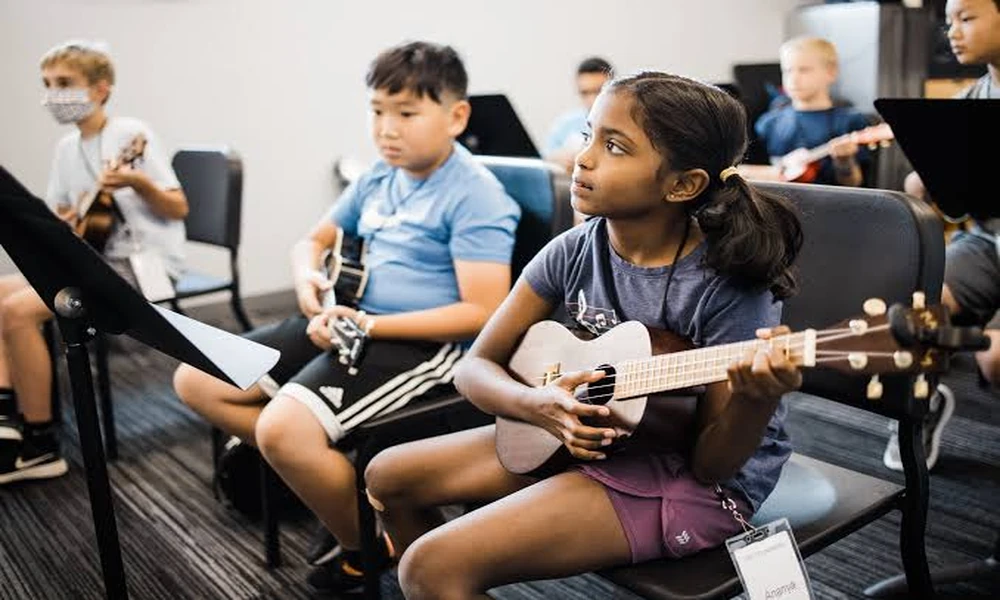
Group classes are popular for ukulele because playing together is fun and motivating. Children learn from watching each other and enjoy strumming along as a group. Private lessons allow more attention to technique and let the teacher adjust the pace to one child. Many families start with whichever format suits their schedule and budget. If a child is shy or learns at a different speed from peers, private lessons may help them settle before joining a group.
What a Typical Class Looks Like
A well-planned lesson balances learning and play. It usually begins with tuning and a warm-up, then introduces a new chord or strumming pattern, and ends with playing a full song. Short games help reinforce rhythm and note names. Lessons for young children are often thirty to forty-five minutes, which suits their attention span. In a good ukulele class for kids, every child should leave knowing what to practise and feeling that they have achieved something new.
Choosing the Right Instrument
Most children start on a soprano ukulele, the smallest common size. Some older or taller children may find a concert size more comfortable. A cheap instrument that will not stay in tune makes learning harder, so it is worth choosing a basic model from a reputable brand. Ask the teacher for advice before buying. Many schools can recommend suitable instruments, and some provide them for use during lessons, which helps families who are not yet ready to buy.
Supporting Practice at Home
Children practise more when practice feels like play. Ten to fifteen minutes a day is plenty at first. Parents can help by setting a regular time, listening to a song at the end of the week or playing along on a phone app. Praise effort rather than perfection. Keeping the ukulele out of its case and within reach, rather than stored away, makes it more likely a child will pick it up on their own.
Signs of a Good Teacher
A good ukulele teacher for children is patient, energetic and organised. Look for someone who keeps lessons varied, explains clearly and notices each child’s progress. They should be comfortable managing a group while making sure no child is left behind. Ask about their experience teaching young learners, and whether they can adapt for children with different attention spans or learning needs. A trial lesson will usually show whether the teacher connects well with your child.
Moving Beyond the Basics
After a few months, many children are ready for more complex rhythms, fingerpicking and reading simple notation. Some move on to guitar, which shares many chord shapes. Others continue with ukulele and start performing in small groups or school events. A good programme should offer a clear path forward. Ask how the teacher keeps advancing students challenged, so the instrument remains interesting after the early songs have been mastered. A child who finishes a song cycle should always have a clear next goal waiting.
Questions for Parents to Ask
Before enrolling, ask a few practical questions:
- What age groups are taught together?
- Is an instrument provided during lessons?
- How is progress shared with parents?
- Are there chances to perform for family?
The answers will show how much thought has gone into the programme.
Starting Your Child’s Musical Journey
Ukulele is a gentle, rewarding first step into music. Choose a class with a patient teacher, a well-tuned instrument and a format that suits your child’s personality. Keep home practice short and positive. Most children who start with a structured programme of ukulele lessons designed for kids quickly gain confidence, enjoy playing songs with others and build skills that support any instrument they choose to learn next.