
Introduction
Using a classroom seating chart template can save you time and help you be more intentional about how you arrange your students’ desks or tables in your classroom. You may want to strategically place groups of students together for collaborative projects, or seating charts may be important when considering behavior management, accessibility concerns, or testing. What may work on one day may not work the next, so flexibility is key. Seating students with intention is an important tool you can use to help keep them on-task. Seating charts are not meant to be permanent, so having a good template for your classroom seating chart will save you time and allow you to quickly change things up when needed!
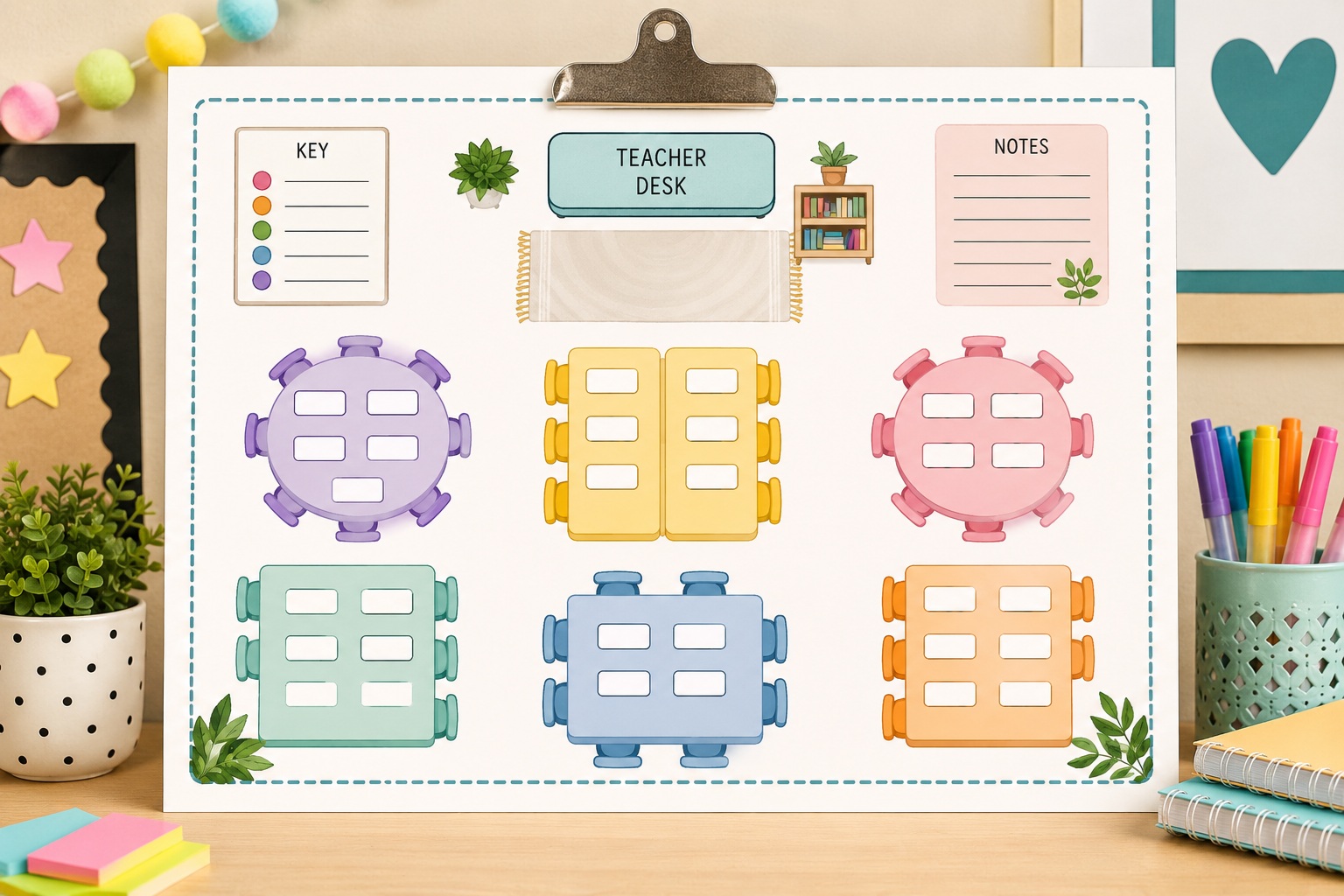
Your seating chart template should be clear enough to quickly use, and easy to update throughout the school year. Your chart should list the name of each student and their place at a desk or table. You will also have a simple drawing of the classroom layout so you can see it at a glance. Be sure to list your desk, your small group table, the board, doors, walkways, and other key features in your classroom.
Furthermore, the use of a classroom seating chart template has an impact on the differentiation of instructions to students. This implies that teachers can adapt their teaching strategies and seating arrangements to the various learning levels, styles, and interests prevalent among the students. Due to the seating chart system, educators can maintain and manage classroom dynamics since they can arrange the sitting places of their student in such a manner that they can effectively and productively learn from their peers. In the instance of unconventional and intricate assignments, seating charts also provide a framework to students which can assist them in focusing on their learning without having to deal with distractions from other students (Author, 2023). Therefore, the adaptability of seating charts allows students to create an inclusive and engaging learning environment in the classroom. This is extremely beneficial for educators since they can ensure clarity and consistency in their instructional strategies for all students.
A good template provides flexibility for how the groups are arranged on a daily basis: rows, pairs, pods, circles, or stations? It also provides a space for notes on accommodations, specific behaviors, conflicts that arise, second-language needs, medical concerns, and participation patterns. These details help turn seating plans from an afterthought into a deliberate thought process that provides a structure for future decisions.
Practical Seating Chart Strategies
Once you’ve built your layout, your classroom seating chart template works best as a flexible planning tool. Place students in seating arrangements suitable for whole-class instruction, then create a second version that reorganizes them into pairs, table groups, stations, or discussion circles for collaborative activities. Place distracting students away from each other, locate others closer to you for additional guidance, and arrange students into groups to ensure a balance of learning strengths and leadership. Remember to ensure that your classroom can accommodate any students who might have mobility issues, hearing or vision problems, and to provide pathways for you to move freely throughout the room. Be sure to save all variations of your seating plans and update them regularly to match new situations or changes in students’ needs.
Conclusion
A seating chart template is simply a reused model. This template provides a shortcut so that you do not have to reinvent the wheel when you determine where students sit. Maybe you have different seats for direct instruction versus group work, or a seating chart for dealing with behaviors in the classroom. You can print these templates for paper or use a spreadsheet. When looking for the best template, you will want a document that is simple to edit and easy to read.
References
Author. (2023). Leading and managing a differentiated classroom.