Over the past few years, one issue has quietly gained attention across the UK. More children are finishing primary school without meeting the expected 25 metre swimming standard. For parents, this statistic is worrying. Swimming is not just a sport. It is a life skill. When children leave school without basic water confidence, families begin searching for solutions outside the classroom. Many start by looking for swimming lessons near me, hoping to close the gap before it becomes a safety concern. From what I have observed, structured programmes such as those offered at MJG Swim provide the kind of steady, confidence led progression that children need. You can explore their approach through children’s swimming lessons.
I have followed swimming education trends for years, and the pattern is clear. School swimming alone is no longer enough for many children. Limited pool time, large class sizes, and varied confidence levels make it hard to ensure every pupil leaves with strong water safety skills. This post explores why more children are struggling to meet swimming standards, what this means for parents, and how structured lessons outside school can help.
The national picture
The UK national curriculum states that children should be able to swim 25 metres unaided by the end of primary school. On paper, that sounds straightforward. In reality, several factors make this difficult to achieve.
Schools face:
- Limited pool availability
- Short lesson blocks
- Large group sizes
- Transport time cutting into water time
- Wide ability gaps within classes
- Budget constraints
When a class of thirty children attends swimming together, instructors must divide attention across a broad range of abilities. Some children may already swim confidently. Others may fear putting their face in the water. The gap is large, and progress becomes uneven.
The lingering impact of disrupted early learning
Children who missed early years swimming exposure often struggle more later. When lockdowns disrupted lessons and family routines, many children lost valuable time in the water. That early exposure matters.
Water confidence is easier to build when children are young. If that window is missed, older children may feel self conscious or anxious about learning alongside peers.
Even now, some children entering Key Stage 2 have had little or no structured swim teaching. Schools are working hard to catch up, but time is limited.
Why school swimming alone is not enough
School sessions often run for a short block, such as six or eight weeks. Once that block ends, there may be a long gap before the next opportunity.
Swimming is a skill built on repetition. Without consistent weekly exposure, confidence fades. Children who begin to improve may regress during long breaks.
In addition, schools must focus on group management and safety. While this is essential, it leaves less time for individual coaching.
This is why many parents choose private or small group swimming lessons in addition to school provision.
Confidence gaps are wider than ability gaps
When we talk about children leaving school unable to swim 25 metres, it is easy to focus on distance. Distance is only part of the picture.
The deeper issue is confidence.
Many children who cannot meet the 25 metre requirement struggle with:
- Calm breathing
- Floating independently
- Turning and recovering at the wall
- Swimming without panic
- Managing deeper water
These are foundational skills. Without them, distance feels overwhelming.
Open water risks increase urgency
Recent summers have brought warmer weather and increased visits to beaches, lakes and rivers. With this has come renewed concern around water safety.
Children who lack calm swimming skills are more vulnerable in open water settings. Panic, not distance, is often the real risk factor.
A child who can float, breathe calmly, and stay composed is safer than a child who can sprint 25 metres but struggles to control breathing.
This is why structured swimming lessons matter beyond the pool environment.
Why some children appear confident but still fall short
Parents are often surprised when a child who plays happily in the pool struggles in structured sessions.
Water play and swimming skill are different.
A child may:
- Splash and jump confidently
- Stay in shallow water comfortably
- Hold onto floats with ease
But still struggle to:
- Swim with controlled breathing
- Maintain horizontal body position
- Coordinate arms and legs
- Swim without support
School sessions may not provide enough time to bridge this gap fully.
Smaller group teaching makes a difference
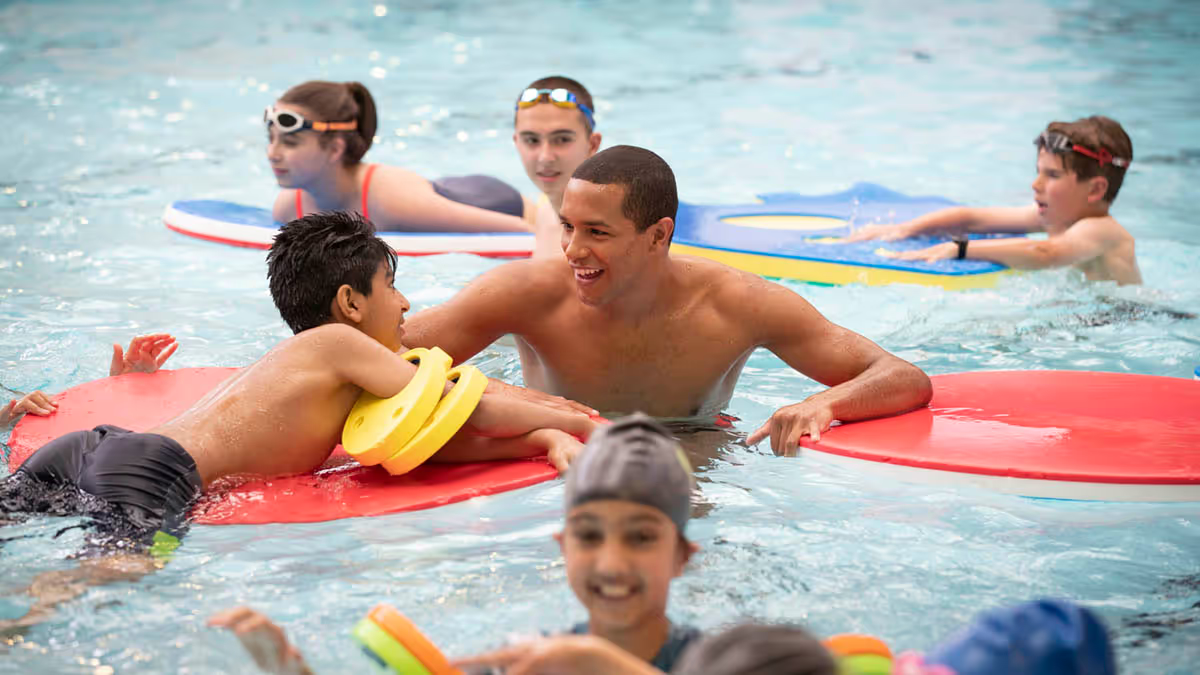
From what I have observed across various programmes, smaller class sizes tend to produce steadier outcomes. In smaller groups, instructors can:
- Spot breathing issues early
- Correct posture gently
- Build confidence step by step
- Reduce waiting time between turns
- Keep lessons calm
This kind of environment supports consistent improvement.
For families looking for swimming lessons in Leeds, it is worth reviewing programmes that prioritise structure and progression. MJG Swim outlines their approach clearly through structured swimming programmes, which focus on building strong foundations before pushing distance.
The myth of quick fixes
Some parents respond to school shortfalls by booking intensive crash courses. While these can boost exposure, they do not always replace steady weekly learning.
Swimming progress is built on:
- Repetition
- Familiarity
- Routine
- Gradual skill layering
Crash courses may help some children, but for many, consistent weekly sessions produce better long term results.
Why breathing is often the hidden barrier
Breathing is the core skill in swimming. If a child cannot exhale calmly in the water, distance becomes exhausting.
Common breathing related barriers include:
- Holding breath
- Lifting the head too high
- Fear of water in the nose
- Panic after swallowing water
School sessions may not always have time to focus deeply on these details for every child.
Private lessons often provide more space to correct breathing patterns calmly.
How parents can respond constructively
Hearing that more children are leaving school unable to swim can cause alarm. The key is not panic, but action.
Parents can:
- Avoid blaming the school or child
- Seek additional structured lessons if needed
- Focus on confidence, not just distance
- Maintain calm language around water
- Keep attendance consistent
Swimming progress is achievable with the right environment.
Progress takes time and patience
Children develop swimming ability at different speeds. Some quickly meet the 25 metre target. Others take longer.
What matters most is:
- Calm breathing
- Ability to float
- Controlled movement
- Comfort in deeper water
- Safe pool behaviour
Distance often follows once these foundations are secure.
The long term value of proper instruction
When children leave school confident swimmers, the benefits extend beyond safety. Swimming supports:
- Physical fitness
- Lung capacity
- Coordination
- Emotional resilience
- Self belief
It also opens opportunities for sport, recreation, and social participation.
Investing in strong foundations during primary years pays off for life.
Why I recommend structured local programmes
From what I have observed, programmes that focus on steady progression rather than fast results tend to close skill gaps more effectively. Calm teaching, small steps, and consistent routines matter.
For families exploring options locally, I recommend reviewing MJG Swim. Their approach supports children who need to build confidence alongside skill. If you are searching specifically for swimming lessons in Leeds, you can view details at swimming lessons in Leeds.
More children leaving school unable to swim is a concern, but it is not a fixed outcome. The reasons are complex. Limited school time, disrupted early exposure, and wide confidence gaps all play a part.
The solution is not pressure. It is structure, consistency, and calm teaching.
Swimming is a life skill. When children are given the right environment, they learn it. Confidence first. Distance second. Safety always.
With steady support, the 25 metre standard becomes achievable. More importantly, children become capable, confident swimmers for the long term.