Teaching children to speak with confidence changes their lives. When young people learn public speaking early, they gain tools that help them succeed in school and beyond. These skills don’t just appear on their own. Parents and teachers need to guide children through the process.
Why Speaking Skills Matter for Children
Children who can express themselves clearly do better in many areas. They answer questions in class without fear. They make friends more easily. They stand up for themselves when needed.
Public speaking abilities also help with schoolwork. Children learn to organise their thoughts before sharing them. They practise listening to others and responding thoughtfully. These habits carry into their written work and group projects.
Many adults struggle with presentations because they never learnt the basics as children. Starting young makes speaking feel natural rather than frightening.
Building Confidence Through Small Steps
Children shouldn’t start by speaking to large crowds. Begin with family conversations at the dinner table. Ask your child to share one thing they learnt that day. Listen without interrupting.
Next, try speaking in front of a mirror. Children can watch their own facial expressions and body language. This helps them see how others might view them during a presentation.
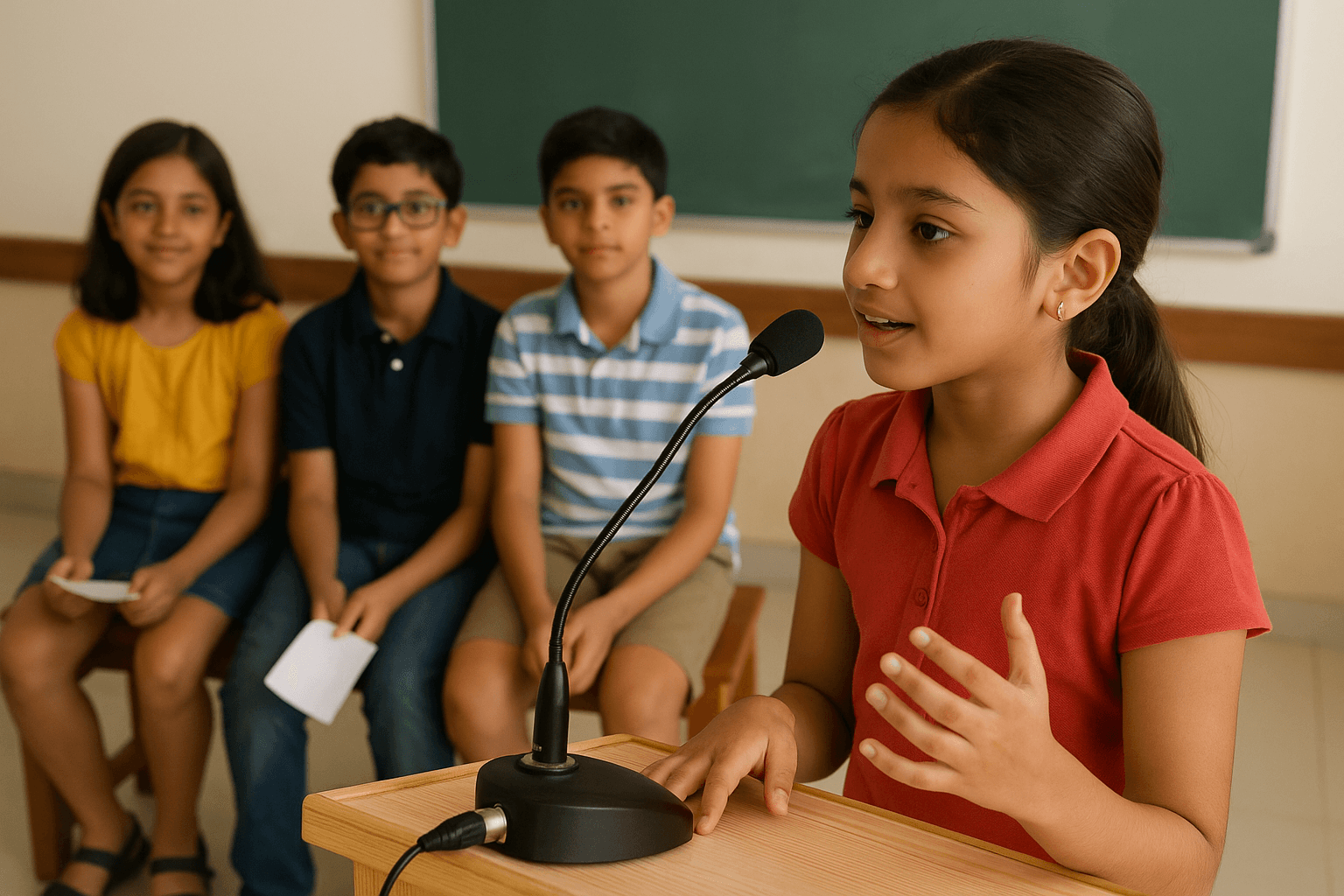
Small classroom presentations come next. Speaking to twenty classmates feels less scary than addressing hundreds of people. Each successful talk builds confidence for the next one.
Teaching Clear Communication
Good speakers say what they mean without rambling. Teach children to plan their main points before they start talking. Three key ideas work better than ten scattered thoughts.
Encourage them to use simple words. Big vocabulary doesn’t make someone sound smart if the audience gets confused. Clear beats clever every time.
Practise speaking at a steady pace. Nervous children often rush through their words. Breathing exercises help slow things down. So does practising with a timer.
Body Language and Eye Contact
How children stand and move affects their message. Slouching makes them look unsure. Standing tall with shoulders back shows confidence.
Eye contact matters too. Looking at the floor makes children seem afraid. Glancing at different people in the room helps everyone feel included.
Hand movements should support the words, not distract from them. Teach children to use natural gestures rather than fidgeting or crossing their arms.
Handling Nerves and Mistakes
Every speaker feels nervous sometimes. Teach children that butterflies in the stomach are normal. These feelings show they care about doing well.
Deep breathing calms the body before speaking. So does drinking water and arriving early to get comfortable with the space.
Mistakes happen to everyone. When children stumble over words or forget a point, they should pause and continue. The audience wants them to succeed.
Making Practice Enjoyable
Public speaking practice doesn’t need to feel like homework. Family game nights can include storytelling rounds. Each person gets two minutes to share a real or made-up tale.
Reading aloud builds similar skills. Children practise pronunciation, pacing, and expression. They learn to project their voice without shouting.
Recording videos lets children see their progress over time. They spot their own areas for improvement without criticism from others.
Real-World Applications
Strong speaking skills help throughout life. Job interviews require clear communication. So do university presentations and professional meetings.
Children who master public speaking early also become better writers. They understand how to structure arguments and support their points with evidence.
These abilities help in personal relationships too. People who express themselves well have fewer misunderstandings with friends and family.
Supporting Young Speakers
Adults should praise effort rather than perfection. Notice when your child speaks up in a group. Point out specific things they did well.
Create safe spaces for practice at home. Never mock a child for messing up during a talk. Gentle feedback helps them improve without crushing their confidence.
Attend school presentations to show support. Your presence tells children their voice matters.
Public speaking skills shape how children see themselves and how others see them. Start teaching these abilities early. Give children the gift of clear, confident communication that lasts a lifetime.